Dennis and Dionne Newton

Dennis and Dionne Newton
Dennis & Dionne Newton

Saturday, February 4, 2017

"These are truly scenes of Hell, written on the darkest pages of human history" - Judge Riad

A New Phrase Enters the Lexicon

In the mid-1990s a horrible new phrase entered the English lexicon; "ethnic cleansing." The first known use was in a Washington Post article from August 1991. The article said that "Serbia's aim is obviously the ethnic cleansing of the critical areas." The Post writer had invented a phrase to best describe the atrocities of wars in the Balkans. It stuck in the popular lexicon. I remember becoming aware of the phrase soon afterwards. At the time, I was far, far away from the unbelievable realities of "ethnic cleansing." This week, however, Dionne and I visited the site of the worst of the ethnic cleansing; Srebrenica.

A Sarajevo example of common Bosnian graffiti urging the remembrance of Srebrenica.

Silver Mine

There is nothing particularly interesting about Srebrenica per se. Meaning "silver mine," the town had about 36,000 inhabitants (a little bigger than my hometown, Rock Springs, Wyoming) and was known as a mining center and for a nearby spa. It was majority Bosniak (Muslim) before the war but there was a sizable Serb population in the surrounding area. And it's location, Eastern Bosnia, meant it was less than 100 km from Serbia.

One of the main squares at Srebrenica. There is not much left in town. It is certainly no longer a town of 36,000.
I was expecting to find more in Srebrenica than we did. It was hard to find a restaurant. We finally gave up after we walked into the main shopping center looking for food and did not find any viable options. Fortunately we were able to find a toalet. Still hungry, we drove to main attraction for visiting Srebrenica...the memorial cemetery.

Patrons at a little cafe in Srebrenica sit in front of a city mural circa. 1930.
A burnt-out building just off the main street.

A U.N. Designated Safe Area

Due to its proximity to Serbia, Eastern Bosnia was the site of many of the most horrific massacres of the Bosnian war. The U.N. responded to reports of mass killings by designating "safe areas" where refugees who had been displaced could gather. Srebrenica was one of these safe areas. It was guarded by between 400-600 Dutch U.N. soldiers who were there to protect the refugees. Nearly 60,000 Muslim refugees gathered there.

“After my village was attacked and burnt down by Bosnian Serb forces in May of 1993, we fled to the UN safe haven, certain the world would protect us. The conditions were abysmal. We lived in a house with 60 people, without electricity or running water, and only one toilet."
Memories of a Survivor.

Surrounded, the U.N. soldiers were in a precarious position. The Serbian forces would not allow many food supply trucks into Srebrenica. Many refugees starved to death. The situation deteriorated until it was clear that the Serbs were massing forces to take Srebrenica. Many of the men decided to leave the town and take their chances hiking across the mountains to Tuzla. Others began to gather at the U.N compound (called Potočari). But everyone knew the Serb forces were coming. It was only a matter of time.

Bosnian banners fly outside of the Memorial. It was built at Potočari, the site of the U.N. compound.

The Dutch soldiers were in a tight spot. According to Malcolm's Bosnia: A Short History, "the Dutch commanding officer in Srebrenica had urgently requested NATO air strikes; this request was transmitted to Zagreb, where senior U.N. officials spent several days considering it. On July 11 NATO planes were authorized to take action; but after hitting two Serb tanks they were ordered to cease their attack because the Serbs were now threatening to kill thirty-two Dutch soldiers" (whom they had earlier taken hostage). Cut off from NATO support and concerned about their own safey, the Dutch became, at best, passive observers, and, at worst, knowing accomplices. So great was the failure of the Dutch that Secretary-General Kofi Annan would later say "the tragedy of Srebrenica will forever haunt the history of the United Nations."

The Dutch left graffiti on the walls of the Potočari compound.


"No One Will Harm You" - Ratko Mladic

The faced little resistance as the entered Srebrenica on July 11th, 1995. Approximately 12,000 refugees had fled into the mountains and another 25,000 had gathered at the U.N. compound. The Dutch initially accepted about 5,000 people into their compound (mainly women and children). But ultimately they were all ordered to leave after the Serbs had gained control of the town. Basically the were handed over to the Serbs.

Commemorative stone outside the cemetery.

Because this took place in the late 20th century, much of this action was recorded on camera. The Serbian commander had told the refugees to not "be afraid, just take it easy...no one will harm you." To my horror, I watched video of him entering Srebrenica, kissing his fellow commanders, smiling, and then turning to his soldiers and saying "on to Potočari, the time has come to take our revenge on the Muslims." Others report him saying that "they would kill all the men and throw them in the Drina river to feed fish and these men would never again kill Serb children in the Serb Drina valley. But they would let the women go so they can suffer."

A headstone has been added for every known victim. More are added each year. Our partners at the Red Cross help identify and verify victims of the massacre. 

"I Distinctly Recall Hearing Screams Coming From the River...But I Never Turned Back to See What Was Happening" - Memories of a Survivor

An estimated 100,000 people died during the Bosnia war. During the 3-year siege of Sarajevo, it is estimated that 10,000 people died there. I will post about the Sarajevo siege at another date.

Names of some of the victims from Srebrenica.

During the 5-day siege at Sarajevo, over 8,000 people were killed. It was not a battle. It was not a fight. It was a slaughter. It was a massacre. A holocaust like extermination of a minority whose only distinguishing feature was their religion. I do not wish to delve into the details. Males, age 12 and older, were separated from the females. They were then systematically killed. Some after a prolonged march. Some on the spot. I watched some videos of men being executed. Their hands were tied. They were in a line. They were told to walk to a certain spot and then they were shot in the back. It was all so workman as it unfolded. And so devastatingly painful to my soul as I watched.

8372 and counting...  We will never know how many lost their lives.


"I Can Still Hear Those Screams Today" - Memories of a Survivor

Living in D.C. for over 10-years, Dionne and I visited the Holocaust museum several times. I am forever haunted by some of the images found within that museum. But at least I could take some hope that we, as a collective mankind, had learned from these horrors. My visit to Srebrenica shattered that illusion. Mankind has not learned anything.

After the war, the U.N. undertook the task of locating the remains of the victims. The Serbs attempted to cover-up what had happened in Srebrenica. Satellite imagery from the U.S. was critical for locating the mass graves.
Many here in Bosnia are haunted by the ghosts of Srebrenica. The people hide it well. They have different ways for dealing with the pain. There is a sense of community here. A weird sense of a humor. But the ghosts are still there. Many can "still hear the screams today."

A worker exhumes a dead body from a mass grave.
The Western world knew that Srebrenica was going to happen. The indicators were there. We are culpable. It could of been prevented. But the Western world talked itself out of doing anything. I want to close with the following quote...which is as applicable today as it was in 1995...


If you would like more information about Srebrenica, I recommend watching one of the following YouTube videos.

https://www.youtube.com/watch?v=yXY4Q0U9mg0 (about 10 minutes long)
https://www.youtube.com/watch?v=ymf5p3LbCAE (short two minute summary)
https://www.youtube.com/watch?v=pZLifuhHevQ (longer video that is subtitled in English)

I Pray As Well - "That Srebrenica Never Happens Again To No One and Nowhere."

Sunday, January 29, 2017

And so it begins again....

As we head into 2017, we are amazed at how quickly time is moving for us on the mission. Today we begin the official countdown from one year, which means our mission is already one third of the way over. We had a few down weeks during the holiday season. And it’s truly a “season” in Bosnia with Catholic Christmas on Dec. 25 followed by a highly celebrated four-day New Year’s weekend which was then followed by Serbian Christmas on Jan. 7th. Almost the entire country takes the full two weeks to celebrate, regardless of their religious association. It was very strange to see St. Nick out and about the first week of January. People have finally gone back to work and things are settling back to normal.

We are now finally moving forward with several of our current projects. After weather delays, we were finally able to arrange for the delivery of supplies for water projects. In one of the towns, the delivery truck was too large to bring the supplies directly to the school so the school had to arrange to meet the truck outside of town and transfer supplies to a smaller truck that could navigate the narrow streets to the school. We were very impressed with the community effort that was made. The school has a large network of parents that offered time and services to make the delivery possible. One parent owns the smaller truck that was used to deliver supplies to the school, another the front loader that moved supplies from one truck to the other. Yet another parent owned the property where the transfer of supplies took place. They also had several parents lined up at the school to help move supplies from the truck into the school. Many of these same parents and several others with professional plumbing, tile work and electrical skills will be assisting with the project. Students from the school's vocational training classes will also be working along side the professionals to help with tile removal and preparing for the renovations. We look forward to visiting again once the work is underway and seeing everyone in action.
This truck was too big to traverse the streets of town

All of these "helpers" are parents of students at the school

Toilets and sinks and tile, oh my!


The school director was there to supervise
The little front loader kept getting stuck in the ice
Parents helping unload at the school

More parents helping


We then headed to the second town to delivery their supplies. It was dark by the time we arrived and began to unload. This project is the construction of a new septic tank system and repairs/remodeling to a couple of bathrooms on the main floor that have been damaged due to back flow from the non-functional septic system.  Again, they were very appreciative and are anxious to get started once the weather warms up.
The second delivery in the dark

Assembly line for unloading


We were unable to be there when the third delivery was made because we were hosting 8 young missionaries for dinner and the Worldwide Missionary Broadcast. During the broadcast the missionaries were taught many wonderful things. My favorite was shared by Elder Bednard, an apostle in our church. He talked about check lists and how people like to check things off and that makes them feel as though they are making progress. His emphasis was on the fact that everything we do should lead to Christ. "All things gather together in Christ." Life is not about lists, it's about living life in a way that helps us know Christ and follow Him. He also counseled them to "talk less and listen more". What great advice! How often do we just want to share our point of view, to tell others what we think without taking the time to truly listen to what they have to say, how they feel and what they might need. The broadcast also addressed some changes to the missionaries' schedules, which offers them more choice in how they carry out their daily activities as well as giving them more time to sleep if needed and a longer time period for their preparation day. It was an enjoyable broadcast, and while it was mainly directed towards the younger missionaries, I found great counsel for my life as well.

Elder Leach with his four way of Skyline Chili

Elder Echols and Elder Hardy opted for cheese coneys

We had a great conversation with the missionaries after the broadcast.

President Grant held a Skype conference with all the missionaries
immediately following the broadcast. They were waving at friends
in other areas of the mission. 

Our little missionary family. From left to right, Elder Hole, Elder Perry,
Elder Echols, Elder Leach, Elder Deleeuw, Sister Locey and Sister Rougeau


We received an email from the third school after they received their delivery and they informed us that they received the wrong faucets. So we contacted our supplier, picked up the correct faucets and headed to Sapna, two and half hours away. We enjoyed a beautiful sunny drive through the snow covered mountains. Upon arrival we were looking over the items that were delivered and noticed that they had received wood laminate doors, instead of the plastic doors we had ordered. Wood doors do not do well in bathrooms...so....we called our supplier, discussed what needed to be done to correct the issue and then proceeded on our way back to Sarajevo. After we had been driving for about an hour and half we noticed that we were driving parallel to a large river. I noted to Denny that I didn't remember the river on our way up, and by the way, shouldn't we have driven through the pine forest by now? Next thing we know we see a sign for Sapna...apparently we missed a turn somewhere and we had made a huge loop and ended up pretty much were we had started. We use our iPad for navigation here but the battery was low and we forgot to grab the charger so we had turned if off because Denny was sure he know how to get home. Let's just say, the nice sunny drive up during the day was much better than the dark drive through dense fog on the way home. We did finally make it, but now have another item to log in our "driving adventures in Bosnia" journal.


In addition to our water projects, we were also able to deliver a computer and printer to one school for children with disabilities. The tablets and specialized keyboard for this project have also been ordered and we hope to make delivery of these items in the next couple of weeks.


Our other current area initiative is for a school and vocational training center for individuals with disabilities. Our project with them is to provide them with the commercial appliances for their new Culinary Vocational Workshop, which will also serve as the cafeteria for the 175+ students who receive two free meals each day. Our budget would not allow us to fully fund this project so we weren’t sure when it would be completed. However, an unexpected year-end donation from a local bank made up the difference! We know Heavenly Father had a hand in this unexpected gift and it further confirmed to us that this was indeed a project that we were led to. Some of the tile work has begun and we anxiously await the delivery of the appliances and cabinetry to complete this project in the next couple of weeks. We have been promised a free meal when it’s all finished.


We are now beginning our search for 2017 area projects and have several meetings scheduled in the near future with some of our NGO partners. A Maternal and Newborn Care major initiative will begin in 2017 as well as the continuation of multiple Vision Care projects, Benson Food projects and, if we can work out VAT issues, possibly Wheelchairs. We look forward to a busy and rewarding year! 

Sunday, January 22, 2017

The Bosnian Faith

One Benefit of Go Karting with a Crazy Driver

As a belated Christmas present, and possibly because he felt guilty for endangering my life on Thursday with his wild go kart driving, Emir Kaknjasevic gave Dionne and I a wall map detailing the history of the Bosnian Kingdom. 

Within the past month, two indoor go kart places have opened up in Sarajevo! 
The oldest known written mention of Bosnia is in the work De administrando imperio from around 950 c.e. The Byzantine emperor lists the country Bosnia (“Horion Bosnona”) and mentions two towns. In 1463 the Ottoman Empire invaded and the medieval state of Bosnia failed to exist. In between these two time periods was the “Bosnian Kingdom.”

The informational map that Emir gave us for Christmas.


The Bosnian Kingdom


The history of this kingdom is fascinating. But the one thing that caught my eye was the Bosnian faith. At the crossroad between East and West and their two Christian powers (Catholic and Orthodox), for centuries these two faiths tried to impose their will upon Bosnia. But the people resisted and a unique brand of Christianity, labelled the “Bosnian Faith,” developed and flourished. This faith was deemed heretical by the Catholic Church and they organized crusades to defeat it. The will and faith of the Bosnian church was strong and they were able to defend against these attacks. This served to further strengthen their faith. And it was the practitioners of this faith that ultimately converted to Islam following the Ottoman invasion. Their heirs form the backbone of the Muslim faith in Bosnia.

Dionne and I at the Jajce castle which dates to the 14th century.
So what was this Bosnian faith? Where did it come from? What were its features? Why did the existing religious authorities feel so threatened by this faith? Emir’s gift led me on a journey to try and discover some of these answers. Here is the summary from the wall map he gave us of the Bosnian Faith.


The Bosnian Faith 

So what was so unique and threatening about the Bosnian faith? At first glance, nothing that obvious. The Bosnian faith was never imposed on people by force. Those who didn’t accept it were never persecuted. It did not request or collect any taxes from either the common people or the rulers. They did not build churches or buildings, preferring to meet outdoors or in homes. The Bosnians simply called it “our faith” or “our laws.” While under attack, both the people and the ruler would stand together by their faith and defended it together. Bogomils were very educated people; at one time, there was a university in Moštre near Visoko. There was also a scriptorium in which religious and common books were copied by hand.
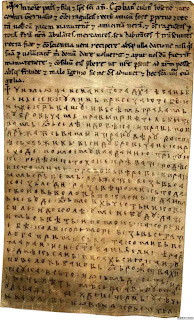
The so-called Bosnian Charter (trade agreement with Dubrovnik and Kulin). While highly educated, many of the Bosnian documents were lost or destroyed because they were considered heretics.
But there were also features that would have been considered both threatening and heretical to the two established churches.
  • ·        They rejected the trinity
  • ·        They rejected the holiness of Mary
  • ·        They believed that God the Father would be the ultimate judge
  • ·        They did not accept the cross
  • ·        They rejected Christian ordinances such as baptism and the sacrament
  • ·        They rejected the saints
  • ·        They strongly preferred the New Testament over the Old
  • ·        The church did not hold private property
  • ·        The most pious would fast 3 days each week
  • ·        The most pious not eat animal products except fish
  • ·        The most pious would not marry
  • ·        But they rejected monasticism
  • ·        The main leaders were called elders (djed) and had a council of 12 (strojnici)
  • ·        They taught honest, charity, and equality of material possessions

Description of the "Bosnian Faith"
With regards to the cross, this was their philosophy. “If someone killed the king’s son with a piece of wood, do you think the king would regard the weapon as holy?”


Four Weddings and a Funeral

Bosnian marriage was a non-frills affair now called “marriage in the Bosnian style.” The marriage ceremony in Bosnia needed no church or priest, and was very simple: the bridegroom would loudly ask the bride in front of all the village folk “Will you be good and loyal to me?” and if the answer was “yes,” marriage would be declared. This was the practice of both common folk and nobility.

When someone died, they would be buried under a stećak, a tall-standing tombstone. Nearly 60,000 of these headstones remain standing in Bosnia; some weighing as much as 10 tons. A finished stećak would be transported by horse or oxen teams; people would use logs or special sleighs to carry it to the burial place. If you see a raised hand on a stećak, it is a greeting that shows friendship and good will and the message “the Sun is shining from my palm.”

Examples of Stećak.

Strength From Opposition

Both the Catholic and Orthodox authorities were concerned about reports of this new faith. In 1200 c.e. Pope Innocent III instructed the Hungarian King Emmerich to “go and ascertain the truth of these reports and if Kulin (Bosnia King) is unwilling to recant, drive him from your lands and confiscate his property.” Kulin hid the truth from the Hungarians and continued to practice the Bosnian faith. The first Bosnian Crusade began in 1225 c.e. That and several other missions failed as the Bosnians were able to defend their land and beliefs. This success merely strengthened the state and the faith.

At its height, the Bosnian Kingdom included parts of Croatia, Serbia and Montenegro.
After several hundred years defending their homeland, the nation had weakened. The remaining adherents to the faith voluntarily converted en masse to Islam in the 15th century. There were two main reasons for this. First, there were many similarities between their faith and Islam including regular fasting, love of charity, and truthfulness. Second, the existing Bosnian King had begun to persecute his followers who were Bogomils. Many of them sought protection from the Ottoman empire which was well-known at the time for its tolerance.

The knights in the Bosnian kingdom were highly regarded


Rodney Starks and The Rise of Christianity

I am personally intrigued by the history of the Bosnian faith because I have studied and generally agree with the scholarship of Rodney Starks; a sociology professor at Baylor University who has published over 30 books and 140 articles on the sociology of religion. Some of his most provocative and interesting work relates to early Christianity. His studies have led him to conclude that early Christianity spread dramatically through both ancient Rome and among Hellenized Jews through the first few centuries. As shown by the numbers below, Christianity had already conquered the Roman world statistically by the time of Constantine. By 350 c.e., 57% of Romans were Christians.

Starks' growth model was partially based on his study of Mormon growth rates and patterns. He sees a lot of similarities between early Christian growth and early Mormon growth (Mormons are still in the "early" phase).
There were a number of factors that made early Christianity attractive. The existing Jewish network (diaspora) provided ample opportunity to preach to a familiar audience. According to Starks, “Jews continued as a significant source of Christian converts until at least as late as the 4th century.” 
Christianity was also a populist movement and was particularly appealing to women. “Christianity appears to have been especially successful among women. It was often through the wives that it penetrated the upper class of society in the first instance” (British historian Henry Chadwick). The following graph shows some of the factors which explain the remarkable early Christian growth.

I put this slide together a few years ago to explain the growth of early Christianity. Another major factor that I highlighted separately is the attractiveness of the church to women. Without going into too many details, women were not valued in Roman society. Christianity recognized their spiritual worth.
Most people view Constantine’s conversion as the beginning of Christendom. Starks, on the other hand, views Constantine’s conversion as the beginning of the end of Christendom. Before Constantine Christianity was growing person-to-person. After Constantine, Christianity grew because it was the “state” religion. But true individual conversion faltered under the weight of becoming the state church. “High levels of religious participation were never achieve because real, person-to-person Christian missions faltered in the 4th century and never reached these areas” (Rodney Starks). Accordingly, Starks tells us that “mediaeval Christendom is a fiction” and that “at most Europe was superficially Christianized.” “Southern Europe was the only part of Europe ever to be Christianized.” 
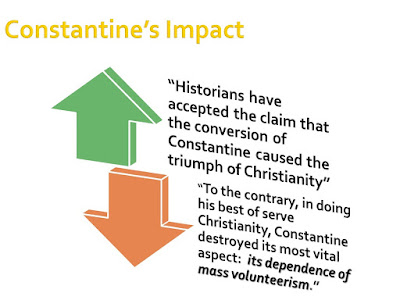
Stark's claim is that Constantine stopped the inertia of true Christianity. He argues that true conversion does not occur by the sword. Post Constantine Christianity spread converted leaders but not the masses.
So, it is through the lens of Rodney Stark’s scholarship with which I am particularly interested in the Bosnian faith. I am intrigued by the story of the a faith that was spread among the people and dependent on "mass volunteerism." A faith that did not require or expect conversion. A faith that treated the king, land owner, and peasant as equally important. A faith whose practitioners were willing to suffer martyrdom rather than appease the dictates of the Pope. And thousands were killed because of the faith. A faith that called itself "true Christianity." I am excited to find a pocket of sincere Christians in the middle of the quagmire of ugliness which was mediaeval Christianity.


Scholarly Confusion About the Bosnian Faith


Scholars are not sure what to make of the Bosnian faith. Since few documents have survived from the period, scholars are reliant on the historical account of the "victors" to try and piece together the particulars. The kingdom also suffered political ups and downs. Towards the end, there are reports of political confusion within Bosnia. 

One account of Bosnia written by the French pilgrim Gilles Le Bouvier, paints a miserable picture of the place: 'They live purely on wild beasts, fish from the rivers, figs and honey, of which they have sufficient supply, and they go in gangs from forest to forest to rob people who are traveling from one country to another.

But nearly all scholars agree that the Bosnian faith was something quite different than the Catholic or Orthodox faiths. Why? Because of the steady stream of missives sent by Rome to Hungary extolling them to get the heretics under control. While many scholars describe the faith in different ways, there is only one scholar, the University of Michigan's John Fine, who argues that their was no distinctive Bosnian faith; instead he feels that they were misunderstood Catholics. Personally, as I have reviewed Fine's evidences, I find them not compelling. 


Gnostics, Arians, Bogomils, Dualists, Modalists, Manichaeans, Cathars, Protestant Precursors or Something Else?

I am sorry that this article has taken a an academic turn. Let me throw you a winter picture from Riders of Hope to give you a quick break.

On Mondays Dionne and I have been helping out with the horses. 
Whenever the try to describe a unique belief set, scholars are wont to assign classifications using labels that they have seen in the past. We saw this immediately with the advent of Mormonism. Labels such as Armianism, Campbellism, Masonism, Anti-Masonism, Modalism, and Arianism have been applied to Latter-Day Saints. Scholars try to understand new things based on their own area of expertise. And by labeling something, it is easier to dismiss it based on straw argument that occurred when an idea first appeared in history. 

With the passage of time, as we know, Mormonism has been shown quite resilient to these types of simplistic labels. It only took 200 years before a scholar really figured out what was going on. Jan Shipps famously identified Mormonism as a "new world faith," the first since Mohammed received his revelations. 

Seminal work by Jan Shipps which helped redefine the Mormon Studies movement.
Scholars attempt to classify the Bosnian faith in many ways. I have listed some of the labels above. I am particularly interested in the label "gnostic" because I have spent some time with the Nag Hammadi texts and am considering writing a paper about one of the non-gnostic texts found in that library. 

Silvanus is a unique text discovered in the Nag Hammadi library. Demonstrably not Gnostic, scholars feel that half the text was written near the 1st Century and the other half near the 3rd-4th Century. For me it serves as a wonderful case study in early and late Christian beliefs. I have identified 8-9 doctrines discussed in both sections and have compared and contrasted. Very surprising. The chart above discusses just one of these doctrines, Wisdom. 
A reason scholars are prone to label is because they have a need to explain every belief based on its predecessors. True innovation is consider rare. And the very nature of scholarship disallows any form of spiritual inspiration. The one certainty, for scholars, is that the practitioners of the Bosnian faith could not have been inspired. I am not personally bound by these rules. I am willing to consider that members of the Bosnian faith may have been inspired and that they were following the promptings of the Holy Spirit. Fortunately I have another 12 months in country to study this fascinating faith. 


Sunday, January 15, 2017

Speaking their Language

The holidays are finally over and it's time to get back to work this week. After a whirlwind couple of months, it was a nice break to have a little free time over the holidays. We went to several movies at the local theater, which we referred to as "language study." Most movies are shown in English with Croatian subtitles so it is actually a practical way for us to see the language in real life use (kind of). Studying from books and apps on our phones is not quite the same as actually listening to or being part of conversations. Hearing how they express common phrases and how sentences are structured in conversation is very helpful. I have been able to pick up some useful words and phrases as well as some I will definitely not be using. (even from PG13 movies!) LOL! Plus, it's only about $3 for a movie ticket so not only is it useful, it's cheap entertainment as well.

Many people here speak at least a little English so we are usually able to communicate and when we try to speak Bosnian, emphasis on try, they just want to practice their English. Most are very proud of their ability to speak English, however it doesn't help us with our Bosnian conversation skills. We are working on vocabulary and grammar (Denny is studying a bit more intensely that I am) but it is a very complex language. I figure if I have the root of a word or two in a sentence, most locals will get the gist of what I am saying and have a good chuckle at my bad grammar! Google Translate is also my go to these days although some of the translations are very inaccurate in reality! We do feel that knowing the language is important to be able to communicate on a personal level with people. Store clerks and government workers aren't individuals we are trying hard to build personal relationships with, but there a people at church and that we have met volunteering at Riders of Hope that we would like to be able to converse with so we will continue our journey through the maze of Bosanski!

A recent example of applied communication happened this past week. Our combo washing machine decided to quit working. It was working fine, then when I went to put in a new load it wouldn't turn on at all. I assumed it was a fuse or breaker but have no idea where the breaker box is for our apartment. Our neighbor downstairs is the acting landlord so I tried to ask him if he could check the breaker box. Well, of course there isn't a comparable word for "breaker box" in Google Translate. It literally translates as "break the box" which makes no sense and I'm terrible at charades so what should have been a two minute conversation turned into about a 15 minute guessing game. I eventually got him to understand that my washing machine was not working, he came up and I showed him that it would not turn on and that I suspected it was the electric outlet. I plugged the iPad in to show him it didn't work. Then he said someone will come and look at it.... sometime. That's where we ended the conversation. We went and bought an extension cord and plugged the washer into a different outlet and will patiently await the arrival of someone to fix the outlet.... sometime! I'm not positive if a better command of the local language would have netted different results, but I doubt it. But it would have been nice to have a genuine conversation with him, to get to know him a little better and start building a relationship that doesn't revolve around something in the apartment being broken!

Another example happened today. There is an older man who recently joined the church. He is a war veteran who suffers with an old injury to his leg as well as chronic back problems. He lives in a small home near the top of one of the mountains surrounding Sarajevo. As the temperatures plummeted well below freezing here we were worried about him so we tried to go check on him last Sunday. He was not home, but a neighbor was able to tell us he went to a senior center so he would be warm and have food. However, we had no idea where the center was or if he was doing okay. Because the previous week he was suffering from debilitating back pain and was unable to get out of bed and he was not answering his phone, we were extremely concerned for his welfare. Ultimately, I reached out to a Red Cross staff member who has become a good friend and asked if he knew of any places that someone in his situation might have gone. He was able to give us the name of a center to check and miraculously he was there. After church the young missionaries came with us to check on him. As we walked into his room he was overcome with emotion that we actually cared enough about him to seek him out. He conversed back and forth with the missionaries and explained his situation and expressed his gratitude. I was able to understand some of what was said, but it was frustrating not to be able to be part of the conversation, to express my personal concern for him myself instead of having to speak through the missionaries. Thankfully, he is warm, has food and has people to help him meet his basic needs. The missionaries went to his home and got his phone charger while Denny and I came home and I made cookies. We then took these things to him and once again I was unable to truly speak to him personally. It made me want to work a little harder on learning the language, not so I can order food at a restaurant or ask where the passport office is. But so I am able to understand people's needs and express my love and concern for them.

Elder Isom and our lost and found friend

We had a zone conference here in Sarajevo this week. It had been postponed from the previous week due to the snow. There is one other senior couple in our zone and we always enjoy spending time with them when the opportunity arises. This time we were happy to have an additional senior couple from the Croatia zone join us. They were sick and unable to attend their zone conference so they came to ours instead. The six of us went out for dinner two nights in a row and enjoyed a little shopping in old town, talking and eating. We all feel a little isolated at times in our individual cities and it's nice to get together once in a while.

We also took the missionaries out to dinner this week and had a few good laughs. Elder Isom was brave and tried the salmon sushi. This was not a nice, yummy sushi roll, just raw salmon on a bed of sticky rice. Here's his attempt at choking it down...


Not to be left out of the sushi eating group, Sister Locey also attempted to eat a piece of spicy salmon roll. Keep in mind, she does not like fish or vegetables much so this was quite out of her comfort zone. She didn't gag, but she also did not take a second piece. We sure love these young missionaries and always feel blessed to spend time with them.


On Friday night the younger missionaries and Denny and I were invited to be the guests of a local Muslim center. When the missionaries in our area want a copy of the Quran they contact one of the members of this group to buy them so that is how the connection was made. We weren't sure what we had been invited to attend other than to have "cavapi." As it turned out, it was just the six of us and they shared a 45 minute video presentation with our little group of missionaries that explained the basic tenants of their beliefs and explained that they are focused on bringing peace to the world. Everything was in English so the spoken language was not an issue. They served us chicken fillets, french fries (they eat more fries here than we do in the US!) vegetables, bread and a nice dessert. As we ate we exchanged our thoughts on several religious doctrines and asked questions of each other. They are not mainstream Muslim so it was interesting to learn of their beliefs. It was not at all what I was expecting, but overall it was a very friendly introduction to their beliefs and an extension of their friendship here in Sarajevo. This was a language I understood.


Preparing the video presentation.
They are working hard to
spread their message of peace. 


Focused or trying to stay awake?? 
Their leader explaining their ideas of heaven and hell
They wanted a group picture, but only one of
their group joined for the photo. 

This coming week we will be on the road again monitoring the delivery of water project supplies to three schools throughout Bosnia as well as a baptism on Friday in Tuzla. It's all conditional on the weather of course so you'll have to wait until next week to see what really happens! We will continue to work on our six approved projects and soon will start seeking opportunities for additional projects with our 2017 budget. There are so many needs here it is difficult to narrow down the number of projects to submit to stay within our budget. We wish we had an unlimited budget and could help everyone in need.

We love you all and know that the Lord is blessing us with small miracles everyday, both here and with our friends and family at home.